
Picking the wood for your custom kitchen cabinets can feel harder than picking the layout. Should you go for classic oak or maple? How about hickory, or is it too busy for your taste? Will cherry darken more than you expected?
That’s a normal place to get stuck, and we walk homeowners through it every week. At Railside Furnishings, we’ve spent 25+ years building custom kitchen cabinets for families across central Pennsylvania, and picking the right species doesn’t have to be complicated once you know what to look for. We’ve seen almost every combination of style, budget, and kitchen layout come through our showroom, and the families who end up happiest are usually the ones who understood their options. So here’s a straightforward breakdown of the wood species we offer, what sets each one apart, and how to land on the right pick for your kitchen.
If you haven’t mapped out the rest of your kitchen yet, our guide to planning your dream kitchen in Central PA is worth reading first. If you’re stuck on wood species, let’s start with the classic option.
Table of Contents







TLDR: Choosing the Right Wood for Your Custom Kitchen Cabinets
No time to read? Here’s a summary:
- Oak & White Oak: Highly durable, classic choices; White Oak offers humidity resistance, while Rift Cut features a consistent, uniform grain.
- Cherry: Features warm tones that naturally darken over time, requiring even light exposure initially to prevent uneven patches.
- Hickory: The hardest wood option, known for its bold rustic contrast between light sapwood and dark heartwood.
- Maple: Versatile with clean, subtle grain, making it ideal for smooth painted finishes or uniform custom stains.
- Walnut & Elm: Premium statement woods; Walnut offers deep chocolate tones that lighten over time, while Elm features a rare interlocking grain.
Oak and White Oak: Traditional Strength With Options
Oak is what most people picture when they hear “kitchen cabinets,” and Railside offers it multiple ways.
Oak
Standard oak brings bold, visible grain and a hardness that’s held up in kitchens for generations. Measured on the Janka hardness scale, it lands solidly in the durable range, so daily use isn’t something to worry about.
White Oak
White oak takes that durability further, with better natural resistance to moisture. That’s a real advantage in older Central PA homes where humidity shifts with the seasons.
Rift Cut White Oak
Rift cut white oak is the one to look at for something more distinctive. The milling process produces a straight, linear grain with almost no flecking or arched patterns, giving every board a clean, consistent look that fits especially well in modern kitchens.
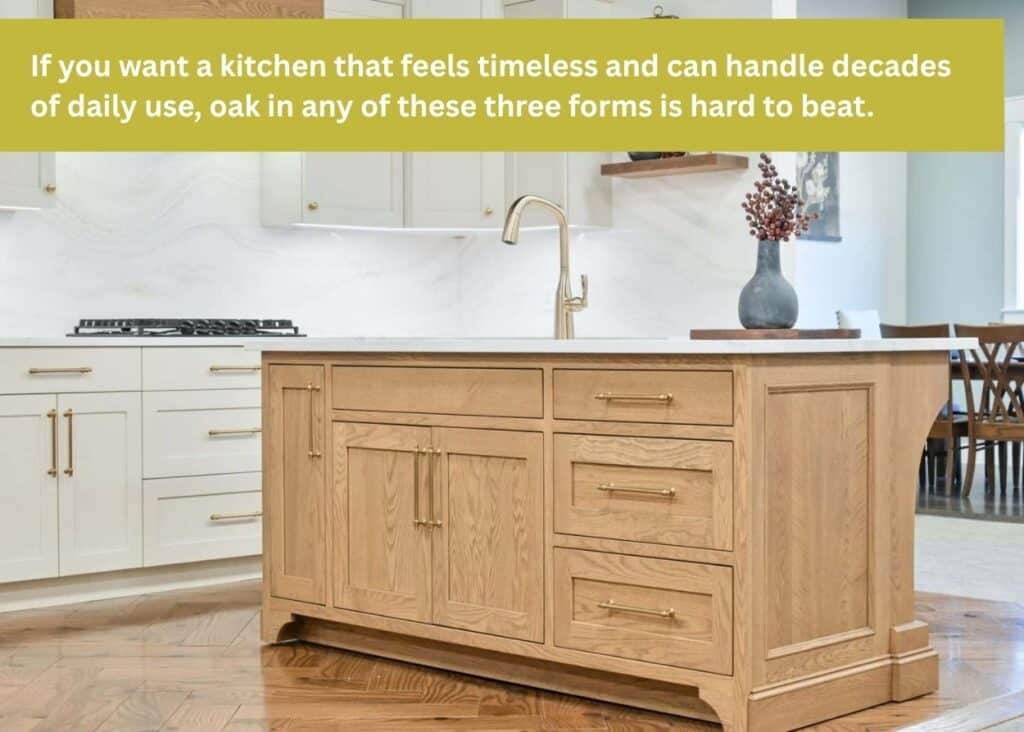
If you want a kitchen that feels timeless and can handle decades of daily use, oak in any of these three forms is hard to beat. That steady appeal is a big part of why it’s stayed the most requested wood in our showroom year after year.
Cherry: Warmth That Deepens With Age
Cherry is chosen for its color, and it has a unique property: its color keeps changing after it’s installed.
Cherry
Fresh cherry starts out light, almost pink toned, and deepens into a rich reddish brown within the first year of everyday light exposure. That’s not a flaw. It’s part of what makes cherry feel different from a painted cabinet.
Rustic Cherry
Rustic cherry carries that same warm tone with more natural character marks and mineral streaking, a good fit if you want something a little less formal. It still ages the same way standard cherry does, so those character marks just become part of the story as the color deepens.
Here’s a tip we give every cherry customer: let the light hit your new cabinets evenly for the first several months. Anything left sitting against them, like a mixer or a cookbook stand, can leave a lighter patch where the wood underneath gets less light.
Hickory: Bold, Rustic Character
If oak is the dependable choice, hickory is the one for homeowners who want their kitchen to make a statement.
Hickory
It’s the hardest wood we offer, and it holds up very well to daily traffic. The real draw is the look: hickory can swing from cream-colored sapwood to deep, reddish heartwood within the same board, a contrast well documented in industry breakdowns of hickory’s grain.
Rustic Hickory
Rustic hickory leans even further into that variation, with more knots and contrast for a farmhouse feel. If you already love the look of hickory but want it turned up a notch, this is usually the version people land on.
No two hickory kitchens look quite the same. That’s either exactly what you’re after or more variation than you want, so it’s worth seeing a sample in person before you decide. Once it’s installed, that same variation is what makes a hickory kitchen feel handcrafted instead of ordered off a shelf.
Maple: Clean Lines and Easy to Finish
Maple doesn’t get the spotlight the way hickory or cherry does, but it might be the most useful wood on this list.
Maple
Its grain is tight and subtle, so it takes paint and stains evenly. Whether you want bright white cabinets or a deep custom stain, maple gives you a clean surface to work with.
Wormy Maple
Wormy maple carries natural worm-track markings for a more rustic look within the same family, giving you texture and character without the bold color swings you’d get from hickory.
Tiger Maple
Tiger maple gives you that shimmering, wavy grain and still finishes as easily as standard maple.
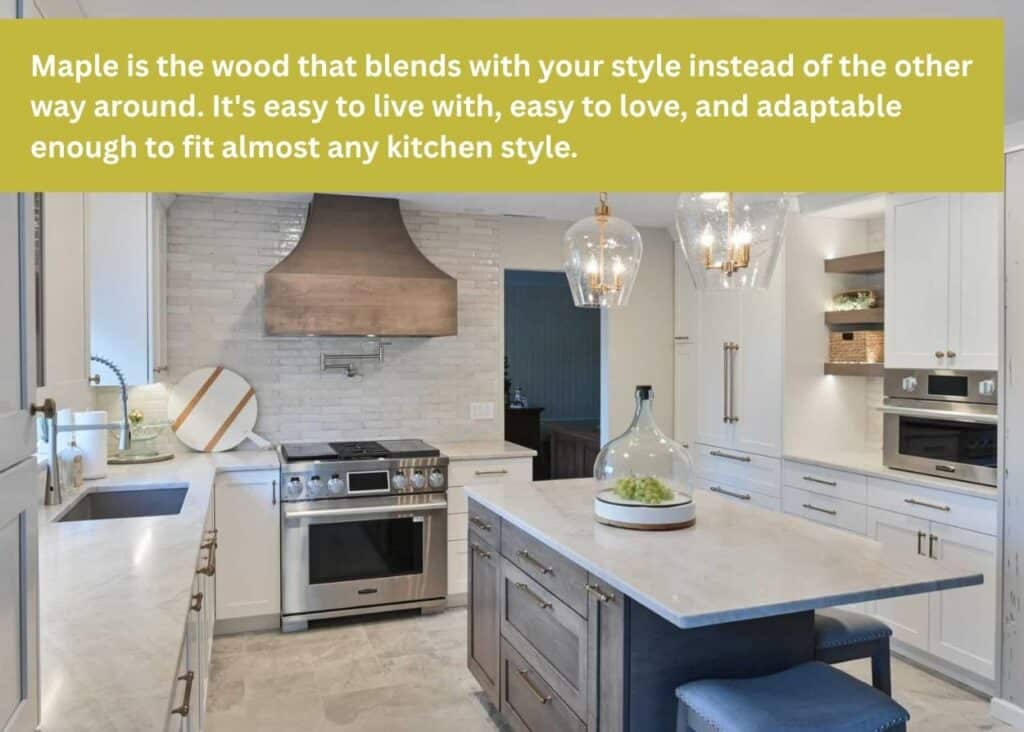
Whichever version you land on, maple is the wood that blends to your style instead of the other way around. It’s easy to live with, easy to love, and adaptable enough to fit almost any kitchen style.
Walnut and Elm: For a Kitchen That Stands Out
If you’ve ruled out the traditional options and want something your neighbors haven’t seen before, walnut and elm are worth a look.
Walnut
Walnut’s deep, chocolate-brown tone actually lightens slightly over time, the reverse of what cherry does. It’s often the choice for a kitchen meant to feel more like fine furniture than standard cabinetry, especially in a home where the kitchen doubles as a gathering space.
Elm
Elm offers a distinctive, interlocking grain pattern that’s less common in cabinetry altogether, a genuine conversation starter for guests who notice these things. It’s a good option if you’ve already got other statement pieces in your home and want your cabinets to hold their own next to them.
Neither is a traditional choice, and that’s the point. They’re for a kitchen built to look like yours and no one else’s, chosen by someone who already knows they don’t want a kitchen that looks like it came from a catalog.
The Stain Makes It Yours
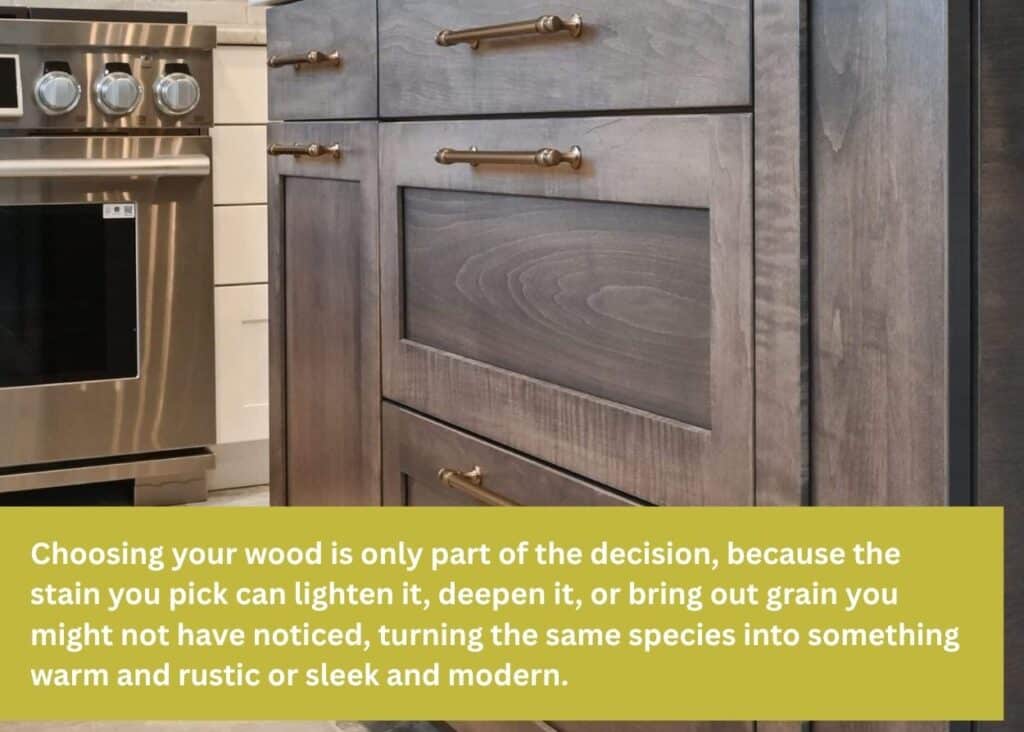
Choosing your wood is only part of the decision. The stain you pick can lighten it, deepen it, or bring out grain you might not have noticed at first glance. Two kitchens built from the same species can end up looking completely different once the stain goes on, one warm and rustic, the other sleek and modern. From there, if you’re ready to keep narrowing things down, browse our stain options to get a feel for what’s possible, and stop by our showroom anytime to see the samples in person.
Ready to Choose Your Custom Kitchen?
Once you’ve settled on a species and stain, the next question is usually whether you want a piece built to your exact space or something from our showroom. Our guide to custom vs. semi-custom vs. stock cabinets is worth a look too, since it breaks down what those terms actually mean before you start shopping around.
Whatever you’re leaning toward, photos and swatches only tell you so much. Grain, color, and figure look different in person than they do on a screen, and a wood you weren’t considering at all might end up being the one that feels right once you’re standing in front of it. Picture the finished kitchen: grain catching the morning light, cabinets that still look good in twenty years, a room your family actually wants to spend time in. That’s the kind of kitchen we build every day at Railside Furnishings.
Visit our showroom in Mifflinburg, PA, to see these woods for yourself, or contact our team to get help choosing the species that’s right for your kitchen and your family for the long haul.